




Nobody should spend a week building a slide deck that's stale by Thursday.
Review prep is a full-time job.
Someone spends days pulling data from five tools, formatting slides, and chasing teams for updates. By the time the deck is done, half the numbers have changed.
Status reports are performative.
People write updates for updates' sake. The information already exists in Jira, Salesforce, and Slack — but someone still has to manually copy it into a deck.
Every team does it differently.
Sales has one format. Engineering has another. The CEO gets a third. There's no consistent view of what's happening across the business.
How it works
How Rhythms Reviews work
Rhythms pulls live data from every connected tool, structures it into the format your team expects, and keeps it current — without anyone writing a word.
Zero-Prep Reviews
Rhythms generates your business review from live data. You just show up.
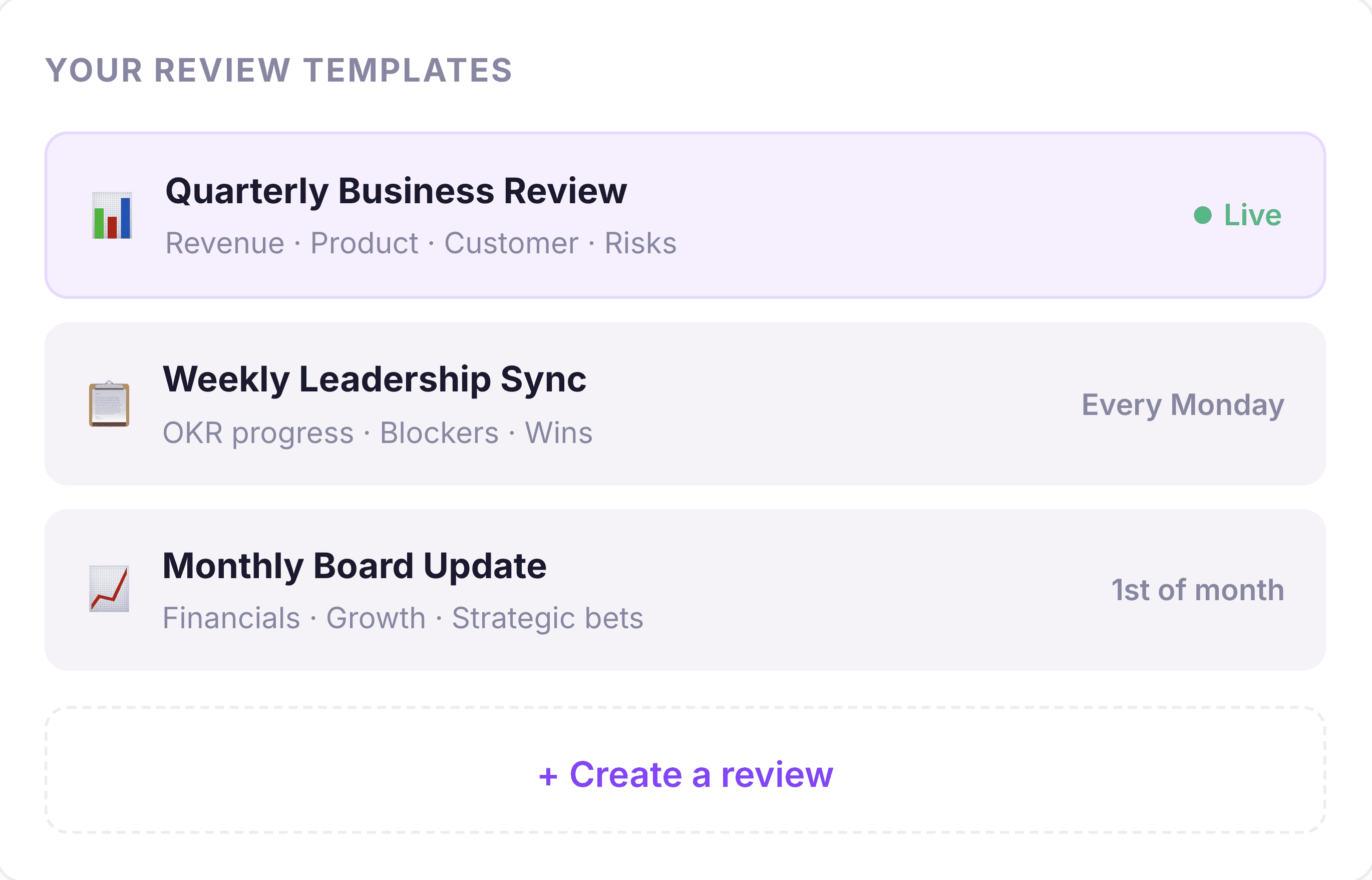
Tell Rhythms what your QBR, MBR, or weekly review should cover. It pulls the latest data from every connected tool, writes the narrative, and keeps it updated until the meeting starts.
QBRs, MBRs, and weekly reviews — all generated from live data across your tools
Refreshes automatically before the meeting — so numbers are never stale
Describe what you want in plain language — Rhythms builds the template
Template Library
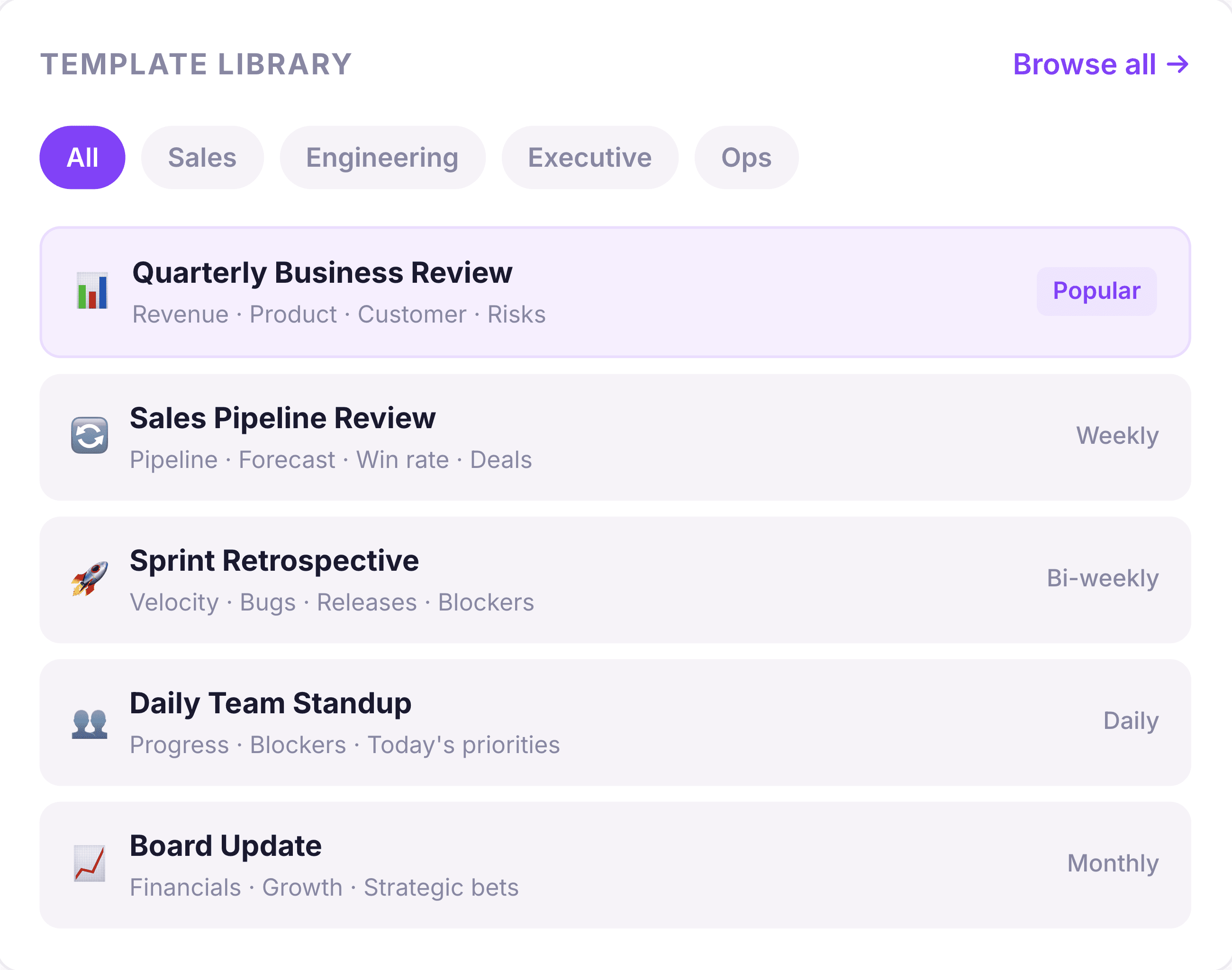
Best-practice templates for every type of review your team runs.
Rhythms comes with a library of ready-to-use templates — from daily standups and weekly syncs to sales pipeline reviews and quarterly board updates. Each one is built on best practices and customizable to match how your team actually works.
Pre-built templates for QBRs, MBRs, pipeline reviews, sprint retros, board updates, and more
Customize any template to match your cadence, KPIs, and review format — it fits your process
Or describe what you need in plain language — Rhythms builds a new template from scratch
Strategic Narrative
Not raw numbers. A story your team can act on.
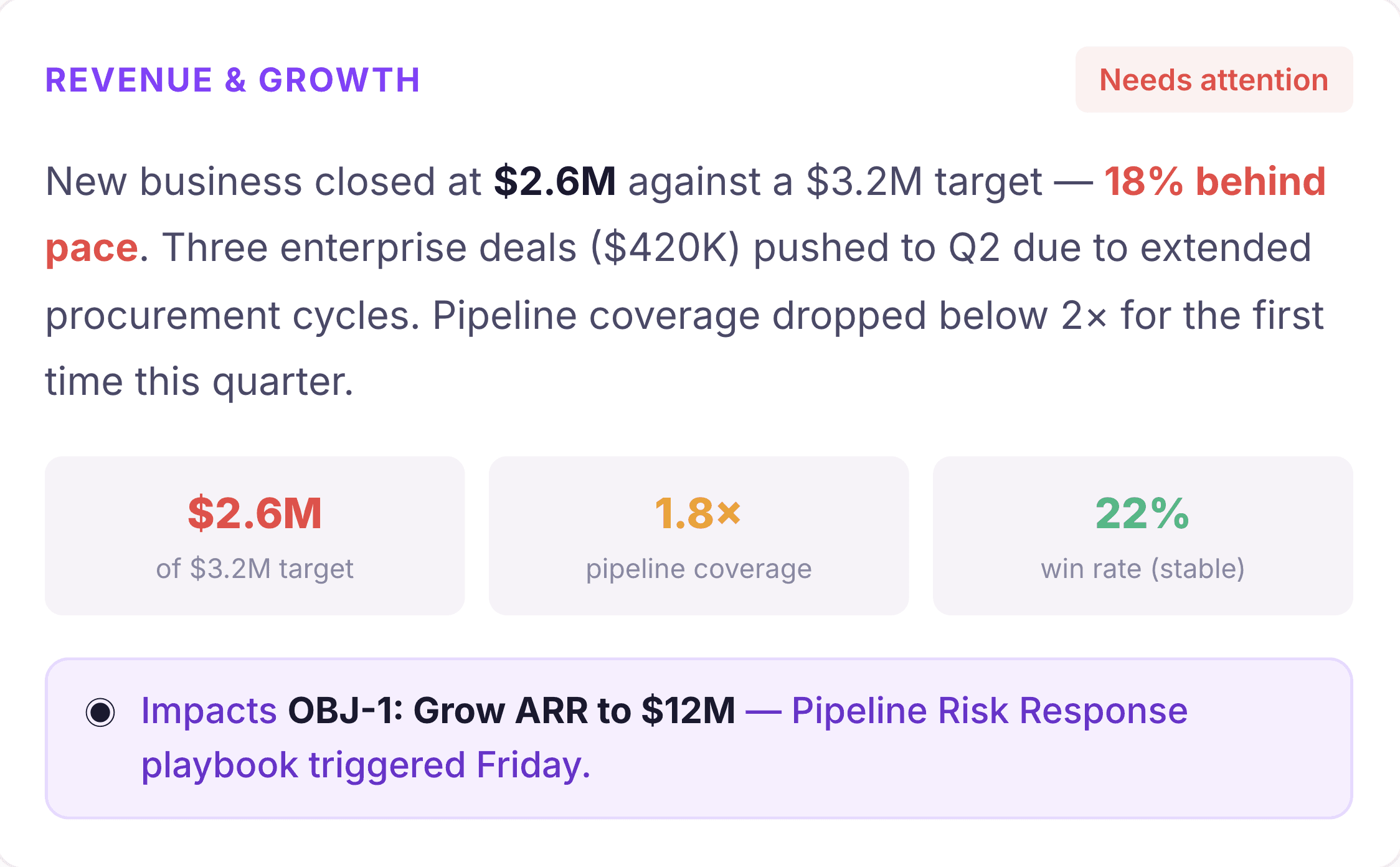
Rhythms doesn't just dump data into a table. It writes an executive summary, highlights what changed, calls out risks, and connects metrics to OKRs — so your review drives decisions, not just awareness.
AI-written narrative — explains what happened, why it matters, and what's at risk
Fully editable — refine the narrative, add your own commentary, adjust the emphasis
Connected to OKRs — every metric ties back to the objectives that matter
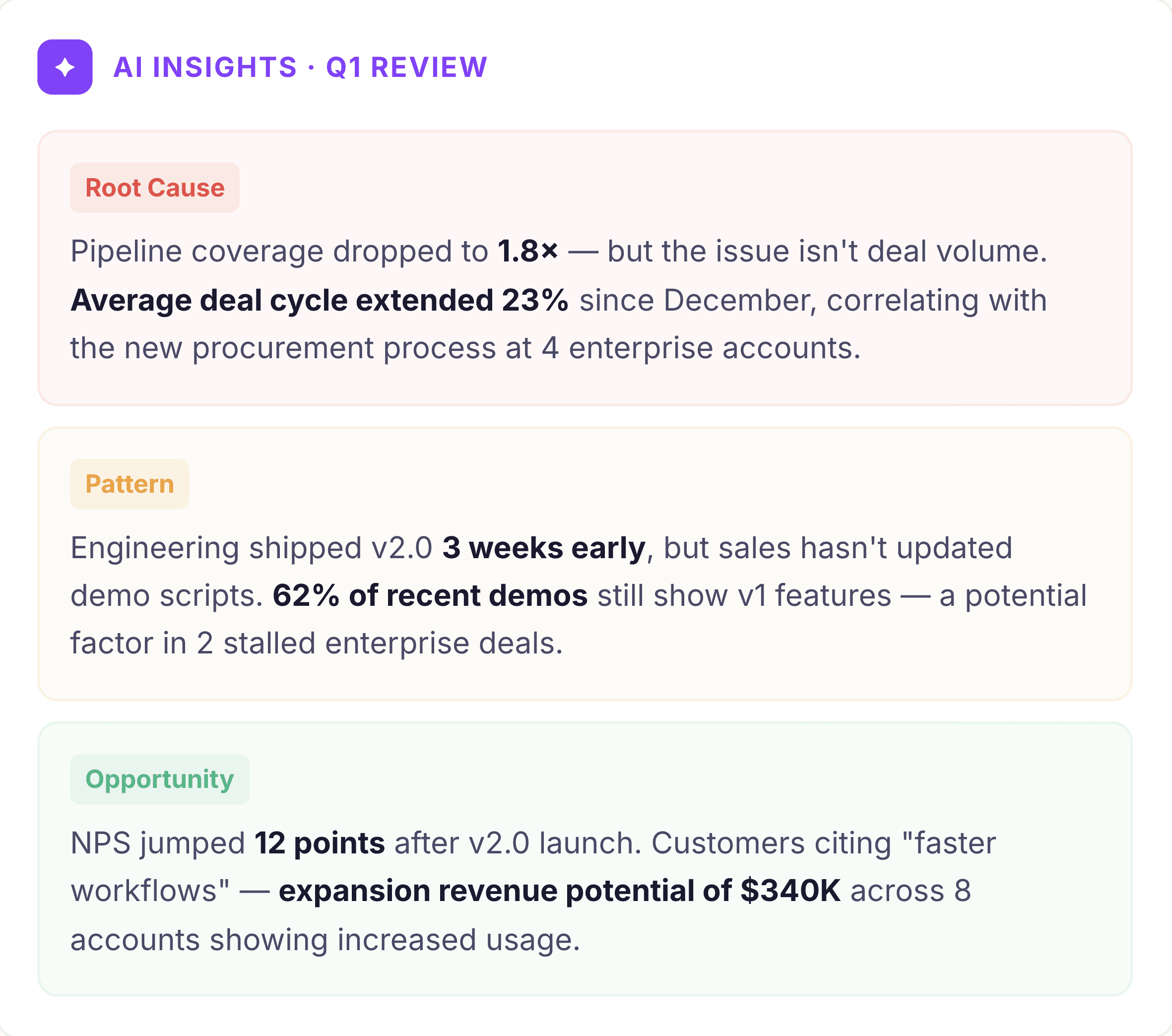
Deep Insights
Rhythms doesn't just report the numbers. It tells you what they mean.
Most dashboards show you what happened. Rhythms digs deeper — identifying root causes, surfacing hidden patterns, and flagging risks before they become problems. Every review includes insights your team would have missed.
Root cause analysis — Rhythms traces metrics back to the underlying drivers, not just the symptoms
Cross-team patterns — spots connections between sales, product, and engineering data that siloed reports miss
Proactive risk flagging — surfaces issues early so your review focuses on what to do, not what went wrong
Status Automation
No one writes a status report again.
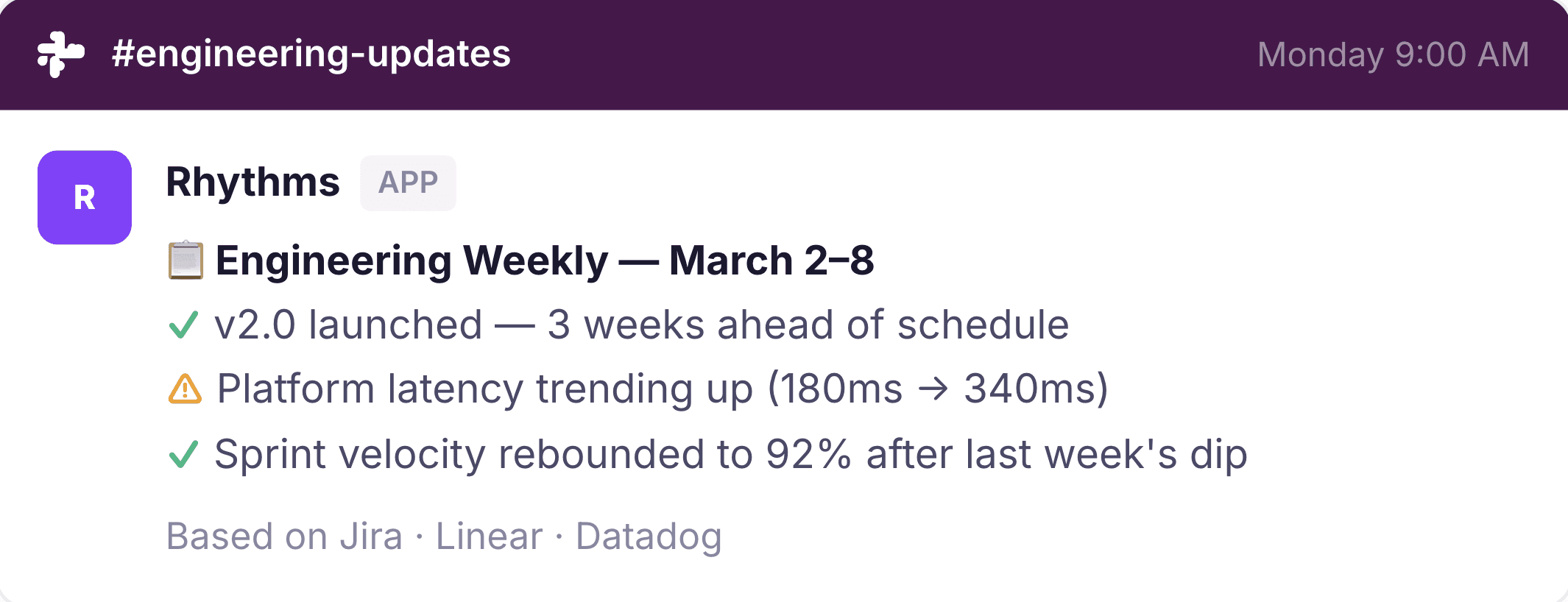
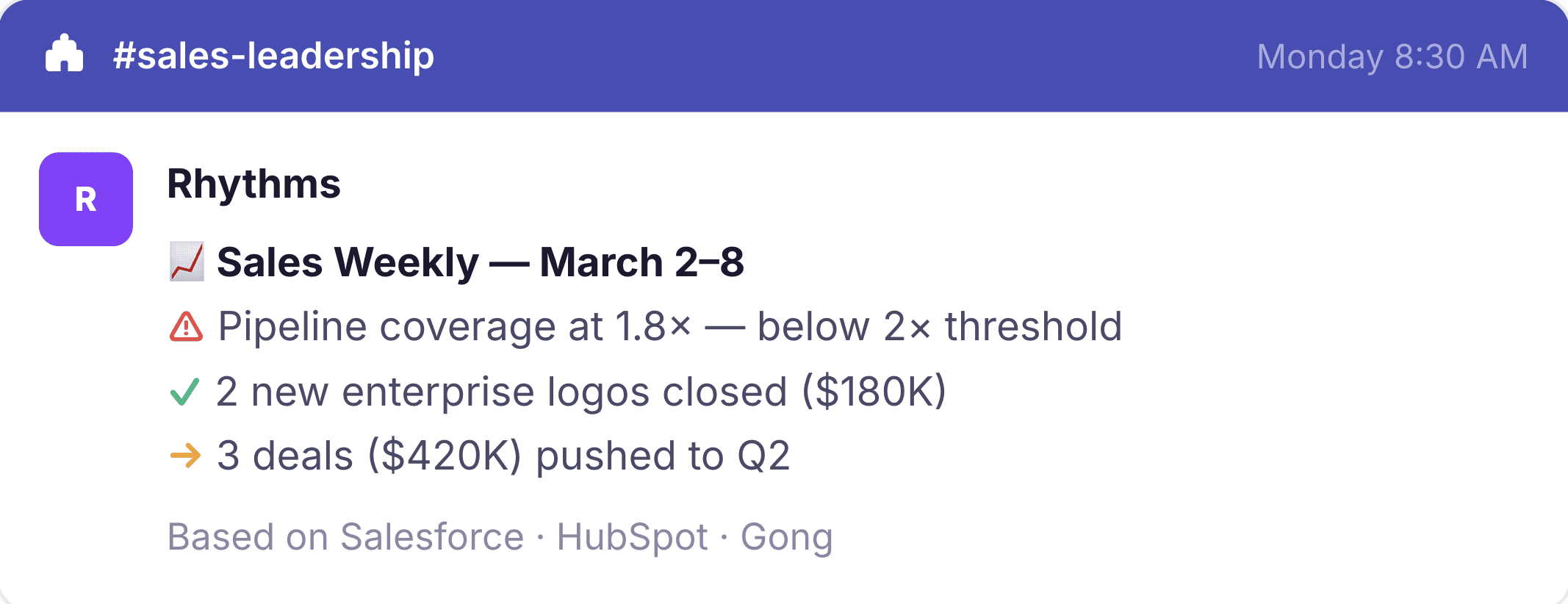
Rhythms generates status updates for every team, every week — pulled directly from the tools where work happens. Delivered to Slack, Teams, or wherever your team reads them.
Weekly status updates written from Jira, Salesforce, Linear, and more — automatically
Delivered to Slack or Teams on a cadence — no one has to remember to send them
Consistent format across every team — so leadership gets a unified view
Live Dashboards
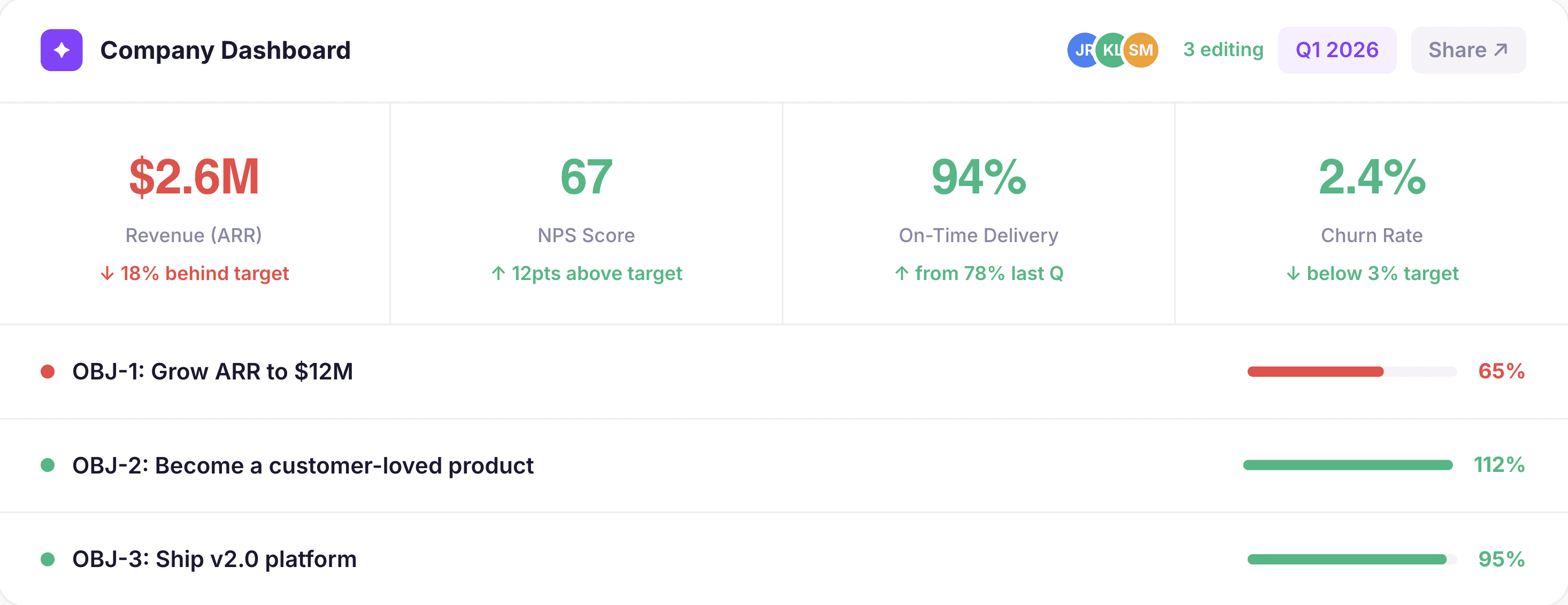
A single view of how the business is doing — built together, always current.
Rhythms dashboards pull from every connected tool and update in real time. Edit them collaboratively, leave comments, share with stakeholders, and curate the outcome as a team — not just a read-only report.